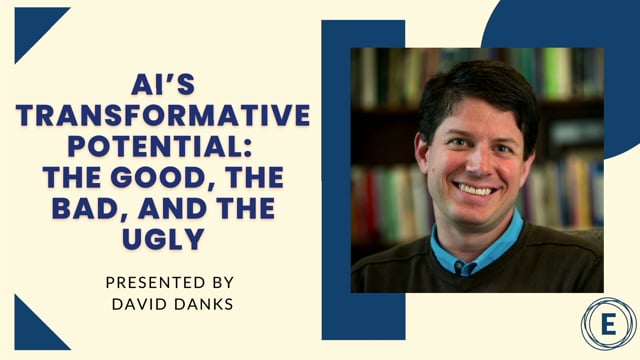
AI’s Transformative Potential: The Good, the Bad, and the Ugly
May 24, 2023 · ERE Recruiting Conference Spring 2023 ·
Speakers

About this video
Artificial intelligence is, at bottom, a pattern-detection machine, and that single fact explains both why it works and why it fails. It can sift through volumes of data no human could review, surfacing signals in productivity, healthcare, and hiring that would otherwise stay hidden. It also reproduces and amplifies whatever biases and errors already sit inside the data it learns from.
The good side is real: supply chains run more efficiently, doctors get help drafting the flood of patient emails they can't keep up with, and standardized scoring can remove some of the human moodiness and bias that creeps into judgments like resume screening or parole decisions. The bad side is just as real, and mostly comes down to hard technical problems rather than malice. Data is almost always messy or incomplete. Building a model that actually works takes far longer than most organizations are willing to wait, so systems get rushed out half-finished. Assumptions baked into a model, about what "success" means or which errors matter most, often turn out to be backwards. In loan approval, for instance, the costlier mistake usually isn't denying credit to someone who could have repaid; it's approving someone who can't, which can ruin their finances for years.
Then there's the ugly: systems built for one purpose that get treated as if they measure something else entirely, an "unusual behavior" detector mistaken for a "suspicious behavior" detector, or judges given bias-reducing bail and sentencing tools who simply ignore or override them, reintroducing the very discrimination the tools were meant to fix. A well-known resume screener that penalized candidates for being "captain of a women's chess team" wasn't coded to be sexist; it just found that people who resembled past hires got ranked higher, and anything the model couldn't recognize got scored as average, which was enough to be rejected.
Key points covered include:
- Why AI's usefulness and its danger come from the same root capability: finding patterns at scale
- How bad or incomplete data, rushed development timelines, and wrong assumptions about what to optimize lead systems astray
- Why giving untrained staff a bare numeric score invites misuse
- Real cases where humans overrode or misread automated recommendations, undoing their intended benefits
- Why models don't understand language the way people do, and what happens when they hit something unfamiliar