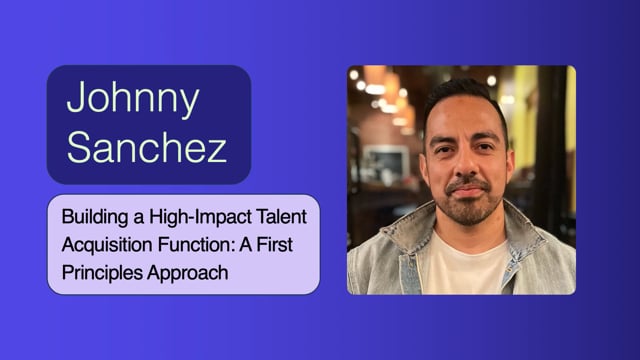
Building a High-Impact Talent Acquisition Function- A First Principles Approach
April 30, 2025 · ERE Recruiting Innovation Summit Spring 2025 ·
Speakers

About this video
Talent acquisition works best when it's treated like a product rather than a set of compliance steps strung together by disparate systems. That reframe changes what recruiting teams optimize for: not just filling requisitions, but building a cohesive, low-friction experience for the people who touch the process every day, from hiring managers to candidates to recruiters themselves.
Legacy applicant tracking systems were built around compliance and getting candidates to an offer, not around user experience. That gap creates friction, and friction shows up as recruiters chasing hiring managers for feedback, teams living in spreadsheets instead of the tools they're given, and low adoption of anything rolled out without buy-in. A product mindset treats those behaviors as signal rather than annoyance.
A design-thinking framework, adapted from product management, offers a way to work through this even without engineering resources or the ability to build custom tools:
- Start with empathy: sit with end users, map their journey, and pay attention to "desire paths," the workarounds people build when the official process doesn't fit how they actually work.
- Define the problem statement before touching a tool or vendor. Requests to "implement this system" get pushed back on until the underlying pain point is named.
- Run blue-sky sessions with no constraints. Whiteboarding the wildest possible solution usually surfaces two or three ideas worth actually building, even inside a third-party tech stack.
- Deliver, then treat the release as a starting point rather than an endpoint. Constant small iteration, not a single big launch, is where real improvement comes from.
Vendor selection follows the same logic: judge tools by whether people actually use them daily, weekly, or barely at all, the way product teams track active users, rather than by feature lists. Coming to a vendor conversation with a clear problem statement and a real understanding of end users prevents adding complexity that doesn't solve the actual pain point.
User feedback belongs at every stage, not just after something ships. Talking through the "who, what, when, where, why" with stakeholders before building, then running new tools or processes past a small group for acceptance testing before a full rollout, catches gaps that would otherwise turn into pushback after launch.
If you've always done it that way, it's probably wrong.
That habit of questioning inherited best practices, rather than assuming a process is fixed because it's familiar, is what keeps a hiring function improving instead of calcifying.