Building Inclusive Hiring Strategies for High-Volume Recruitment
February 28, 2023 · Webinars ·




About this video
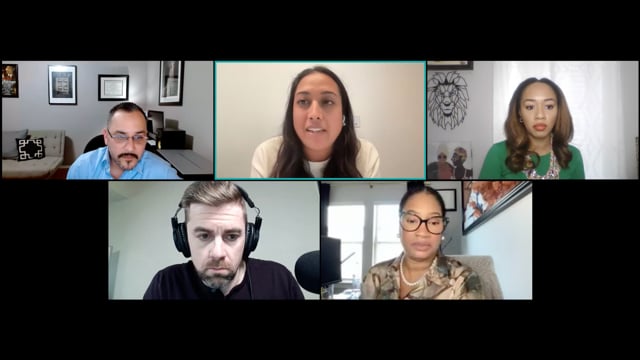
Recruiting teams that hire hundreds or thousands of people a week face a particular challenge: keeping diversity central to the process when speed and scale dominate every decision. A panel of talent acquisition leaders from healthcare, business process outsourcing, financial services, and private equity portfolio companies compares how their organizations approach this, from staffing structures to definitions of diversity to the data used to track it.
Volume numbers vary widely across sectors. A BPO running call center hiring brings on hundreds of people weekly, moving thousands through class-based hires each year, with recruiter teams supplemented by dedicated interviewers who call and screen every applicant. A financial services program hires class by class as well, training candidates toward securities licensing exams and tracking pass-through rates as a core recruiting metric. A large multi-state health system balances high-volume support roles against low-supply, high-demand roles like nursing and clinical techs, relying on a large combined team of recruiters, sourcers, and onboarding staff. A private equity firm oversees hiring practices across dozens of portfolio companies, playing a consulting role to spread effective practices across very different-sized businesses.
Definitions of diversity differ by organization and by community served, and several practical points recur:
- Diversity gets defined explicitly by leadership and talent acquisition teams together, rather than assumed, since misalignment on the definition makes it impossible to measure progress.
- Diversity extends beyond race and gender to include socioeconomic background, geography, career history, and years of experience, with hiring managers actively discouraged from favoring candidates who resemble themselves.
- Placing jobs in underserved communities and job deserts naturally shapes the makeup of a workforce, and organizations built this way experience diversity differently than those recruiting from broader labor markets.
- Workforces are measured against the makeup of the communities and customers they serve, treated as a guiding benchmark rather than an abstract goal.
- Data and accountability at the leadership and hiring-manager level, not just at the recruiter level, determine whether diverse candidate slates actually translate into diverse hires.
Staffing models, class sizes, sourcing strategies, and the balance between recruiters and interviewers all get compared directly, giving a picture of how different industries structure teams to hire at scale without losing sight of who gets hired.