Busting Bureaucracy: Eliminating Inefficiencies to Fill Roles Faster
April 6, 2022 · ERE Digital Spring 2022 ·
Speakers
.jpeg)
About this video
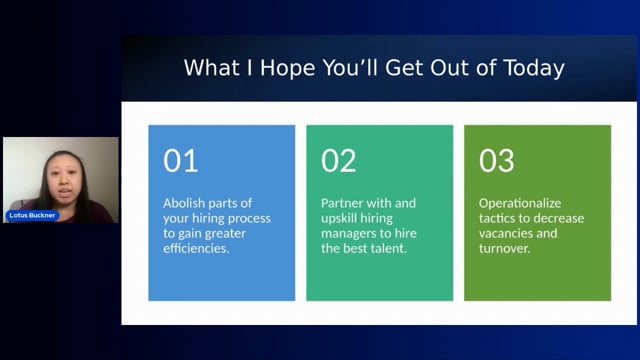
Frontline dining and facility teams cutting operating hours because they couldn't hire fast enough. IT roles sitting open for months. Recruiters unable to hire other recruiters. A root cause analysis into candidate drop-out and ghosting during multi-round interview processes for minimum wage jobs turned up a hiring process bloated with waste at every stage, from requisitions to postings to interviews, and a set of fixes that cut time to fill roughly in half.
The process changes covered three areas:
- Requisition intake was cut down to roughly half its original length by removing redundant approval steps that added no value before a job was even posted.
- Internal posting minimums and thirty-day external posting waits were eliminated entirely, allowing recruiters to screen candidates as soon as they applied instead of holding every requisition open for weeks.
- Interview loops that ran four to six rounds, including recruiter, hiring manager, peer panel, stakeholder panel and leadership panel, were reduced to a three-round maximum and a two-finalist limit, forcing faster, sharper decisions.
Hiring manager partnership turned out to matter as much as the process redesign itself. Discovery sessions before a job was even posted got everyone aligned on what the role actually required, closing gaps that had been confusing candidates and interviewers alike. Process alignment sessions set expectations on scheduling and flexibility. Sharing a realistic, transparent timeline with candidates addressed one of the biggest drivers of drop-out: people leaving for other offers because no one could tell them how long the process would take. Pre-scheduled debrief sessions for every candidate, rather than waiting to compare a full slate at the end, pushed hiring managers to evaluate each person thoroughly as they went and make offers the moment a qualified candidate appeared.
Beyond process, wage increases that couldn't match competitors like Starbucks or Amazon were supplemented with cafeteria-style voluntary benefits: continuing education reimbursement, discounted childcare, and better communication of perks that already existed, such as self-scheduling, paid shadowing and free meals, but that employees didn't know about. Where internal capacity or expertise was thin, outside partners such as RPO providers and benefits brokers filled the gap.
Results tracked over several months included a full elimination of mid-interview drop-out, an estimated halving of time to fill, a fifteen percent improvement in turnover, and a threefold gain in employee engagement scores.