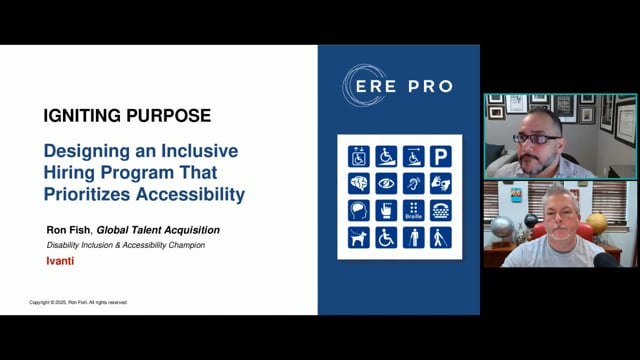
Designing an Inclusive Hiring Program That Prioritizes Accessibility
June 2, 2025 · Webinars ·
Speakers

About this video
Disability inclusion remains one of the most overlooked areas of talent acquisition, even as it represents the largest minority group in the world. While most companies run programs focused on gender or racial representation, very few have built anything intentional around disability, often treating it as a charitable cause rather than a hiring priority. The content here reframes that approach, laying out specific, low-cost ways to build a hiring process that actually works for candidates with visible and invisible disabilities.
Key practices covered include:
- Using free tools to audit whether a career site works with screen readers, braille displays, and keyboard-only navigation, and how to bring a website team into the conversation by framing accessibility as a way to simplify code and improve site performance.
- Rewriting job postings to include a clear accommodations contact, inclusive language in company statements, and a trimmed list of truly essential skills rather than an intimidating wish list that discourages qualified applicants from applying.
- Adding job tags and postings that reach disability-specific networks and job boards, so candidates searching those platforms immediately recognize an employer as disability-friendly.
- Partnering with local and state workforce services organizations and disability-focused charities to access ready-made talent pools, often at no cost to a recruiting budget.
- Opening interviews by directly asking candidates what would optimize their experience, and being prepared to offer accommodations such as extended interview times, captioning, or sign language interpretation.
- Training recruiters and coaching hiring managers so accommodation requests are handled consistently and confidently rather than treated as exceptions.
Supporting data points illustrate why this matters: disability affects a substantial share of the global population, unemployment rates for people with disabilities run far higher than for those without, and organizations recognized as leaders in disability inclusion have outperformed competitors on key business measures. The through-line is that meaningful inclusion doesn't require a large budget or a public statement campaign. It requires small, deliberate changes to career sites, job postings, sourcing channels, and interview practices that remove unnecessary barriers and let capable candidates get in the door.