Don't Hire Pokemon, Recruit People
November 10, 2020 · Talent42 Digital Fall 2020 ·
Speakers

About this video
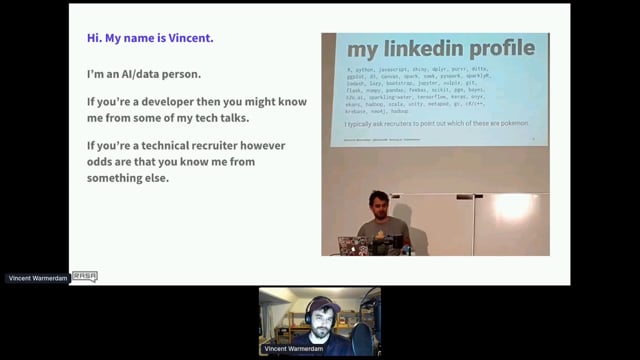
A viral photo showing a made-up list of technical skills, with a few Pokémon names slipped in among real programming tools, became one of the most recognizable images in tech recruiting circles. What started as a throwaway joke at a conference talk grew into a recurring meme, resurfacing every few weeks on Reddit and LinkedIn, and eventually into an occasion to think seriously about what the joke was actually pointing at.
The story behind the photo traces back to an early-career habit of learning new tools by applying them to video game and tabletop datasets, then writing up the results as blog posts and conference talks. That practice led to a string of odd encounters with recruiters: multiple people from the same agency quoting different salaries for one role, duplicate LinkedIn profiles used to get around being blocked, a recruiter trying to hire someone for the company they already worked at, and messages that treated a listed skill as interchangeable with unrelated ones. The Pokémon names were added to a skills list partly as a private joke and partly as a test of whether anyone reading it actually understood the terms.
After the photo spread widely, reactions split in two directions. Some people, including recruiters and talent professionals, engaged with it warmly and even used it to talk shop. Others treated it as ammunition for mocking recruiters wholesale, a framing that never sat well with its creator. Feedback gathered directly from developers points to what actually causes friction:
- Job posts padded with every technology a company has ever touched, rather than what a role uses day to day
- Vague or inflated experience requirements, including one widely shared case where a tool's own creator had less experience with it than the job listing demanded
- A wish to be evaluated on real projects, writing, and open-source contributions rather than a checklist of keywords
The larger argument is that resumes built around personal projects, blogs, talks, and community involvement say far more about a candidate than a dense list of tools ever could, and that treating hiring as a keyword-matching exercise widens the gap between recruiters and the technical people they're trying to reach.