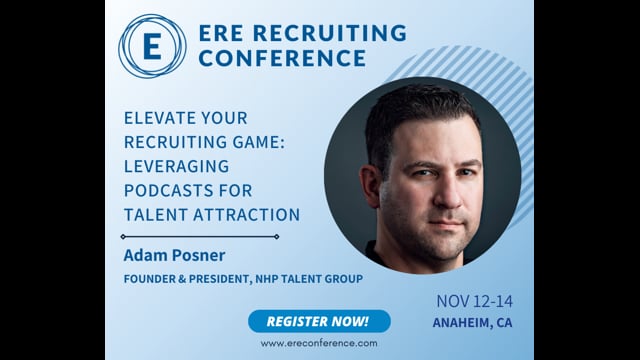
Elevate Your Recruiting Game: Leveraging Podcasts for Talent Attraction
November 14, 2024 · ERE Recruiting Conference Fall 2024 ·
Speakers

About this video
Standing out to candidates has gotten harder now that every company's careers page, job ad, and social post looks the same. One underused channel for cutting through that noise is the podcast, used not as a marketing gimmick but as a way to show what working somewhere is actually like instead of just describing it.
The case for podcasting in talent attraction rests on a simple idea: candidates research companies heavily before applying, and they respond better to real employees talking about real work than to polished brand copy or stock photography. Several approaches, drawn from actual company examples, illustrate how this plays out:
- A company podcast that lets marketing leaders and strategists narrate real client work and case studies, giving candidates a clearer picture of day-to-day work than a website ever could.
- Niche, audience-specific shows built around particular employee segments, such as a financial-services podcast aimed at women in the organization, highlighting their work and career trends.
- Sponsorship-style podcasts where a recruiting brand attaches itself to entrepreneurial or industry storytelling instead of producing a company-branded show outright.
- Product-and-customer podcasts that feature client case studies to show a tool in action and, indirectly, the culture of the company behind it.
- Internal-only podcasts, restricted to employees, that rotate hosts among staff and cover unconventional topics unrelated to the company's core product, giving employees a platform and a sense of ownership.
- Behind-the-scenes shows built around brand loyalty, where fans of a product or company already exist and can be turned into a recruiting pipeline through authentic, low-lift storytelling.
Beyond full podcast production, shorter video and audio snippets can be repurposed directly into recruiting outreach: clips of current nurses, gate agents, or other frontline staff describing their roles, dropped into candidate emails so the message comes from peers rather than a recruiter or hiring manager. The goal throughout is to replace generic, one-size-fits-all messaging with specific, human, and often unscripted content that builds trust before a candidate ever applies.
The framing throughout rejects the language of "culture fit" in favor of a harmony built from difference, and pushes recruiting teams to treat every touchpoint, from first outreach to offer, as a chance to show rather than tell.