Eliminating Bias and Bottlenecks
March 10, 2022 · SourceCon Digital Spring 2022 ·
Speakers

About this video
Economic shifts, from the move to electric vehicles to sustained government spending, are reshaping labor demand in ways that make sourcing expertise more valuable than ever. Understanding the story behind hiring data, not just the numbers themselves, gives sourcing leaders the credibility to guide business decisions on talent strategy.
That credibility starts with looking inward. Every recruiting process carries some degree of unconscious bias, and automating a broken process only accelerates the damage, as seen in the well-known case of an automated hiring tool that penalized resumes containing the word "women's." Spotting bias means comparing the diversity of a talent pool against the diversity of who actually gets hired, using external labor market tools to set realistic benchmarks rather than guessing.
Bottlenecks get the same treatment. A bottleneck is any stage where candidates pile up faster than they move through, and it slows everything upstream and downstream of it. Hiring manager screens, once placed early in the process to convince candidates a job was real, now function as an unnecessary filter in a candidate-driven market. Moving hiring managers to the end of the pipeline, so they compete for qualified finalists instead of knocking people out early, turns a bottleneck into a pull.
Practical steps for building this kind of data-driven sourcing function include:
- Pulling external labor market data on diversity makeup and real-time salary ranges before setting hiring goals or negotiating pay bands with hiring managers
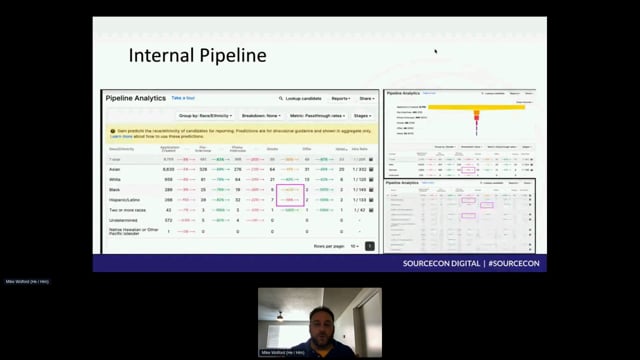
- Auditing internal pipeline data stage by stage, watching for pass-through rate drops of more than a couple of days at any step, and checking whether diversity holds steady or drops at specific interview rounds
- Setting service-level agreements with hiring managers, such as a fixed number of qualified submits per requisition, to force clearer feedback and free up sourcer time
- Translating time-to-fill and agency-fee savings into dollar terms the business already tracks, since cost savings carry outsized weight compared with sales figures
- Bringing a proposed solution alongside any identified problem, rather than presenting a list of complaints without a plan
None of this replaces sourcing skill. It reframes the job: pairing search expertise with process improvement, metrics, and business fluency so that sourcing leadership earns a seat in decisions about pay, process design, and where hiring managers sit in the funnel.