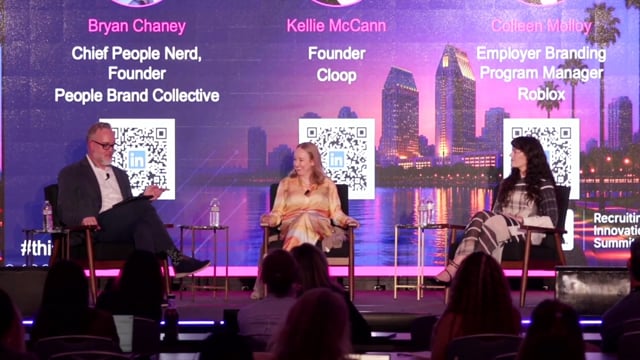
Employer Brand in the Age of AI and Radical Transparency
November 10, 2026 · ERE Recruiting Innovation Summit Fall 2026 ·



About this video
Search behavior has shifted from people browsing career sites to AI systems summarizing an employer in a few sentences, pulled from reviews, social posts, news, and whatever else is discoverable. That shift changes what employer brand content needs to do and how it needs to be written.
The conversation covers how optimizing for AI answer engines differs from traditional SEO, and what that means in practice:
- Replacing broad, scene-setting language with specific, quotable facts: concrete numbers, named programs, verifiable claims that an AI system can lift directly into a summary rather than paraphrase.
- Structuring long-form content, like blog posts, with short summaries at the top, since AI tools tend to skim for relevance before deciding whether to read further.
- Treating video as a format that still works for human audiences even when AI can't easily process audio, provided it carries accurate captions and transcripts so it remains discoverable.
- Letting employees tell unfiltered, specific stories about how they got hired, what they work on, and why they stayed, rather than scripted or overly polished testimonials that read as corporate.
- Treating a career site less as a destination and more as one node in a larger, uncontrollable ecosystem of reviews, forums, social posts, and AI summaries that shape candidate perception before anyone talks to a recruiter.
There's also a case made for building immersive, product-based recruiting experiences rather than static landing pages, using an internal example that grew far past its original adoption target by giving candidates something to explore rather than read.
A recurring theme is the gap between what gets promised in employer brand content and what employees actually experience once hired. When AI synthesizes information from both sources, contradictions surface quickly and become visible to every future candidate. Closing that gap means pulling in leadership, recruiting operations, and other departments to identify where promises and delivery diverge, rather than treating it purely as a content or messaging problem.
Also addressed: why believable employee stories depend on corroboration across many consistent (not identical) accounts, why admitting imperfections builds more trust than uniformly positive messaging, and why content that honestly discourages a poor-fit candidate from applying can be more valuable than content designed purely to attract.