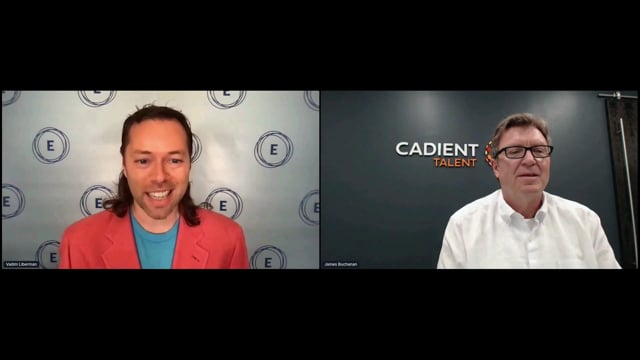
Exploring Myths and Truths About AI in Recruiting
May 25, 2021 · ERE Digital Spring 2021 ·
Speakers

About this video
A conversation about artificial intelligence in recruiting cuts through the loose terminology that surrounds the topic and lays out a practical view of what machine learning can and cannot do in a hiring process. Rather than "artificial intelligence," the preferred term is "augmented intelligence" — technology built to help humans make better hiring decisions, not replace their judgment.
- Quality of hire is defined primarily by tenure: candidates likely to stay on the job longer than average and become productive employees. Machine learning earns its value by spotting combinations of variables — not just single data points like experience or education — that predict who will stick around.
- Out of roughly a hundred data points on a typical application, only twenty to thirty tend to matter for predicting tenure, and it's often specific combinations of those variables, not any one factor alone, that make the difference.
- Bias mitigation comes down to controlling inputs. Algorithms never deviate from the rules they're given, so withholding age, gender, race, name, and even certain educational signals prevents those factors from influencing outcomes — something human decision-makers struggle to do consistently.
- Machine learning does not replace recruiters or hiring managers. It narrows a large applicant pool down to a manageable shortlist, leaving the final judgment about fit and culture to people. Companies processing huge volumes of applications, including some receiving hundreds of thousands a week, cannot realistically review every candidate without this kind of filtering.
- Automating a flawed process just makes bad decisions faster. Real value comes from using data to challenge past hiring choices that led to turnover, not from speeding up decisions that were already wrong.
- Unstructured data, such as video interview responses converted from speech to text, is described as a growing frontier for evaluating traits like communication skill and leadership, offering a less intrusive alternative to lengthy assessments that cause candidates to drop out.
- Organizations considering adoption are advised to start by defining what a quality employee looks like in their own business and let the data reveal the traits and characteristics tied to top performers, rather than assuming any tool works the same way everywhere.
The overall picture is one of a tool suited to high-volume, high-turnover hiring environments, valuable for sifting through more data than any team could manage by hand, while leaving final decisions about people to people.
Sponsored by Cadient Talent