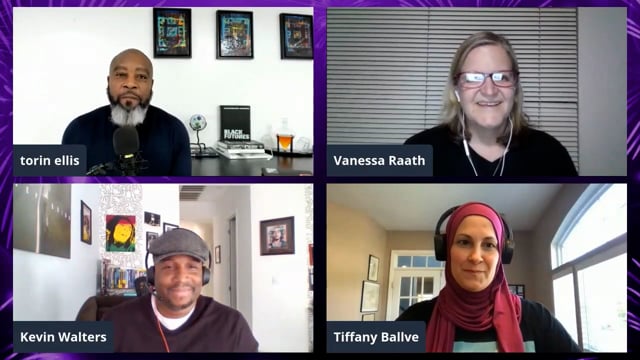
Fireside Chat - Shift The Narrative
October 20, 2021 · SourceCon Digital Fall 2021 ·


About this video
A candid conversation among sourcing and talent acquisition practitioners looks at what actually moves diversity work forward, beyond strings, tools and quotas. The framing rests on four ideas: empathy, intentionality, proximity and transparency, with storytelling as the thread that ties them together.
Several concrete themes run through the discussion:
- The idea of being a "diversity superhero," someone who puts underrepresented groups first regardless of their own background, and treats allyship as active work rather than a label.
- Using data instead of emotion to challenge hiring managers when a job description, a location choice, or a comment in the room doesn't hold up. One example: presenting a talent map showing a stronger candidate pool for a role in a different city than the one a hiring manager first requested.
- Pushing back on passivity in sourcing and recruiting. Instead of taking a job description at face value, sourcers are urged to act as talent advisors, walk into requisition meetings with a point of view, and ask hiring managers what one unlisted quality actually matters most for the role.
- Being "generous with your genius," sharing toolkits, search strings and best practices rather than treating knowledge as competitive advantage.
- The gap between recruiting diverse candidates and actually including them, drawing a line between inviting someone to the dance and letting them help choose the music, with retention and career trajectory raised as places the work usually stops too soon.
- Discomfort with broad identity labels such as BIPOC and BAME, and a question about whether such umbrella terms help or flatten people's actual stories.
Personal history shapes much of the exchange, including perspective from growing up during apartheid in South Africa and experience navigating rooms where speaking up carried real risk. The conversation returns repeatedly to storytelling as a practice: asking people about their own experiences rather than assuming them, and treating another person's story as something to be earned and respected rather than claimed.
The exchange closes on what organizations should start doing rather than stop doing: leaning into strengths at historically Black colleges and Hispanic-serving institutions, using empowering language internally, and treating intentionality as a daily practice rather than a training-day concept.