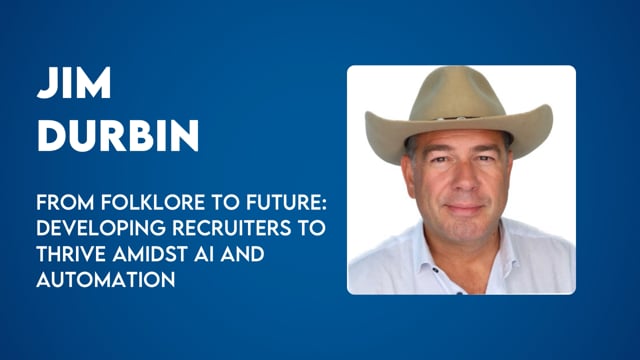
From Folklore to Future: Developing Recruiters to Thrive Amidst AI and Automation
May 16, 2024 · ERE Recruiting Conference Spring 2024 ·
Speakers

About this video
Old stories about man against machine, from John Henry to the coal miners of Appalachia, carry a grim lesson: progress wins and the worker dies trying to prove otherwise. That fatalism has crept into how recruiting teams talk about artificial intelligence and automation, and the words used inside a company shape whether people freeze up or keep doing good work.
Recruiting leaders undercut themselves constantly without noticing. Saying "I fell into HR and never left" or "we need to do more with less" tells executives the function is disposable. Praising referrals as the top source of hire while implying they beat recruiters on quality sends the same message: that a hiring manager's memory is worth more than the whole team's budget. The fix isn't hiding the data, it's framing it around outcomes rather than apology. A staffing push tied to a concrete result, like keeping a fleet of ships fully crewed so refunds never happen, lands differently than a report about time-to-fill.
Several practical shifts run through the argument:
- Every recruiting metric gets tied to a business outcome the C-suite already cares about, not to internal process wins.
- Basic financial literacy, including what a P&L actually is, builds credibility with finance and protects teams when budgets get cut.
- Time saved by automation becomes a case for higher-touch recruiting, not a talking point about needing fewer people.
- Recruiters given real time, budget, and protection from noise are the ones who fix broken processes instead of just reacting to them.
- Magical thinking, waiting for a new applicant tracking system, one more hire, or a future AI breakthrough to fix problems, only delays work that needs attention now.
- Despair from the top spreads fast: managers who quietly doubt their company's future, or joke that recruiting doesn't matter, pass that mood straight down to their teams.
The larger point is that recruiting problems tend to repeat every generation, not because nobody knows the answers, but because new hiring managers and new candidates keep needing to be taught. That repetition reads as reassuring rather than defeating. AI and automation change tools, not the underlying need for people who understand hiring, negotiation, and how to make a workforce function. The stories a team tells about its own value determine whether it acts like an asset worth keeping or a cost waiting to be cut.