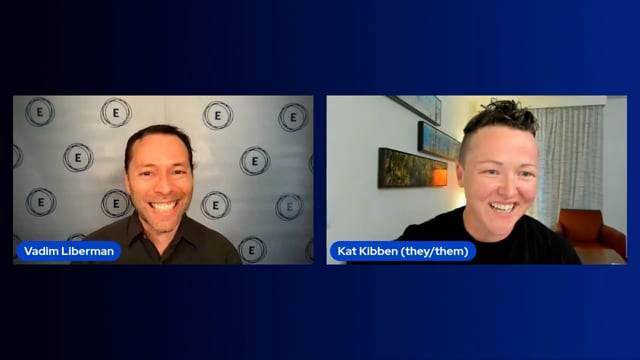
From Story to Strategy: Creating Messaging That Connects With Candidates
April 6, 2022 · ERE Digital Spring 2022 ·
Speakers

About this video
Most employer value propositions read the same because they are built the same way: a handful of leadership perspectives distilled into a few polished, buzzword-heavy sentences that no candidate actually believes. An analysis of EVP language from widely admired companies found that a large share of them use nearly identical phrasing, which is exactly the opposite of what a brand statement is supposed to do.
The alternative is building recruiting personas instead of chasing a tidy brand statement. Marketing personas try to reach broad audiences and count any small percentage of response as a win. Recruiting has to take an entire pool of people and narrow it down to one hire, which takes more specific, more honest input. Personas work best built at three levels: company-wide (what genuinely holds true everywhere), team-level (what makes a specific team different from competitors), and for high-volume, low-retention roles that eat up recruiting time.
Building a real persona takes two kinds of input:
- Quantitative data: culture surveys, candidate experience audits done by someone outside the company, and labor statistics used as an industry baseline rather than a goal.
- Qualitative data: direct conversations with current employees about how they found the job, what convinced them to stay, and what words they actually use to describe the work.
A word like "collaborative" means something different at every company, and only real conversations reveal what it actually means at yours. In one case, a nonprofit childcare provider struggling to hire and retain staff discovered through simple questions that its best employees had come through personal connections to the community rather than job boards, which reshaped how referrals and outreach were framed.
Career sites and job postings benefit from the same honesty. A strong career page leads with a headline about the candidate, not the company, includes real social proof from employees, and offers both a direct call to action (apply) and a lower-commitment one, such as a downloadable FAQ built from the questions hiring managers get asked most often. Job postings work best around two hundred fifty words, written without buzzwords, describing actual day-to-day experience rather than generic requirements, and listing only qualifications that are truly mandatory.
Underneath all of it is a simple standard: a good employer story is honest, specific, personal, and written the way the company actually talks, not the way it wishes it sounded.