From Strategy to Operating Model: The Hard Work After the Roadmap Is Built
November 10, 2026 · ERE Recruiting Innovation Summit Fall 2026 ·
Speakers

About this video
Building a strategic roadmap is the easy part. Getting a team to actually live it, especially while the business keeps shifting underneath them, is where most operating model work quietly falls apart.
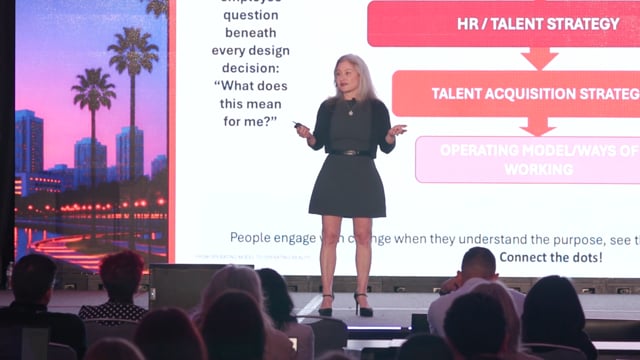
A framework for connecting talent acquisition work to business strategy starts with three questions, answered in order: What is the business trying to do? What is the HR and talent strategy meant to solve for? And what is the talent acquisition strategy or roadmap that follows from that? Only after those are answered does an operating model make sense to the people who have to run it. Skip the sequence and recruiters are left asking "what does this mean for me?" without an answer.
A real example from a national retail brand shows the chain in practice: a company-wide strategy to restore an in-store customer experience cascades into an HR goal to simplify the store leader role, which cascades into a talent acquisition goal to streamline frontline hiring interviews and build bench strength for key positions. Each layer points back to the one above it.
A simple internal document built around purpose, behaviors, and key priorities gives a team something to lock onto: why the function exists, what it looks like at its best, and the specific priorities, like candidate experience, that the team will be judged on and held accountable to.
Other points covered:
- A launch date or new org chart does not create an operating model by itself; the real work is what happens after rollout, through practice, feedback, and repetition
- Change adoption has a direct business payoff, and most large transformations fail because of people issues rather than technology problems
- Transparency works better as an adoption strategy than reassurance: sharing what is known, what is not yet known, and what decisions are still pending builds more trust than silence
- Involving stakeholders, individual contributors, and frontline leaders while building the operating model, not just after announcing it, is what makes people willing to carry it forward
Lessons are drawn from building and rolling out operating models across large-scale recruiting organizations, including one case where a company restructuring announcement landed the day after a new model was introduced to the team.