Fundamentals of Finding Hidden Talent
October 21, 2021 · SourceCon Digital Fall 2021 ·
Speakers

About this video
Most people who hold a security clearance never say so on their resume or LinkedIn profile. Many are actively discouraged from disclosing it. That means recruiters who search only for the words "cleared," "TS/SCI," or "secret clearance" are missing the majority of the qualified population. Finding cleared candidates means learning to recognize the indirect signals that point to a clearance without anyone stating it outright.
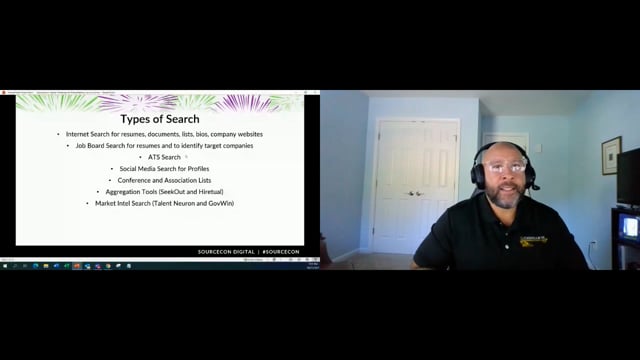
The material covers a working sourcing method built around simple, broad searches that get narrowed with modifiers rather than complex strings loaded with clearance keywords from the start. Key tactics include:
- Searching for military transition language, unit acronyms, and reserve designations, since the military is the largest source of cleared professionals and many recent veterans still hold active clearances even after leaving service
- Targeting DoD-approved baseline certifications such as IAT Level I, II, and III, which are required alongside a clearance for many technical, cyber, and help-desk roles and can be combined with location-based proximity searches
- Building X-ray searches against LinkedIn, GitHub, and personal portfolio sites using job titles and technologies rather than clearance terms, then enriching results with sourcing tools that surface contact details and coding profiles
- Running file-type and inurl/intitle searches for resumes, bios, and "about me" pages, which often surface developers and engineers who maintain personal websites
- Using market intelligence reports to identify which employers and government contracts hire cleared workers in a given region, then building search strings around those companies instead of clearance status
- Searching by contract or program name, which can return highly relevant candidates with a short, simple string rather than an elaborate Boolean chain
There is also guidance on outreach: personalizing messages for senior or highly specialized roles, referencing something specific about a candidate's background, and treating every contact as a potential referral source even when their clearance status is unknown. The underlying idea throughout is that recruiters get further by thinking about where cleared people work and what they signal indirectly than by hunting for candidates who advertise their clearance outright.