How to Address the Influx of AI-driven Candidate Applications
April 29, 2025 · ERE Recruiting Innovation Summit Spring 2025 ·
Speakers

About this video
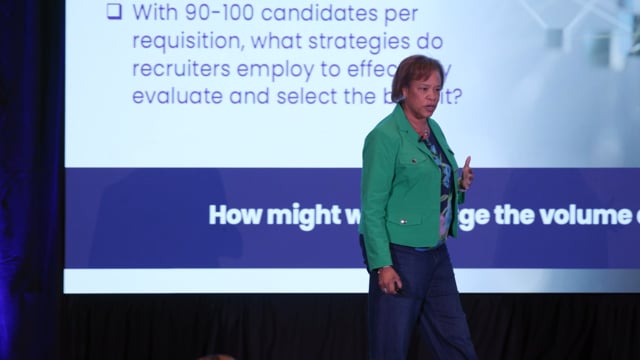
Job postings that pull in hundreds or thousands of applicants within days have become routine, and the volume is straining recruiters long before anyone gets to a real conversation with a candidate. Rather than treat this as an unsolvable flood, a large employer's talent acquisition team built concrete practices for managing it, along with a new way to measure whether the resulting candidate slates are actually any good.
- Rediscovery over reposting. With tens of thousands of candidates already sitting in the database, recruiters can be pushed to source from existing talent pools instead of automatically posting every open job, using a CRM that already holds people who have raised their hands.
- Calibration discipline. Matching tools only work if hiring managers calibrate requisitions properly and confirm that calibration after posting. Skipping the confirmation step, or leaving experience ranges too broad, quietly breaks the matching and leaves recruiters blaming the technology instead of the setup.
- Fast disposition. Clearly unqualified applicants should be screened out immediately rather than held "just in case," and qualified candidates still waiting on a decision should get a short status note so they aren't left wondering whether anyone has looked at their resume.
- Tighter job postings. Titles should reflect what the market actually understands, not internal job-architecture language, and bloated job descriptions can be rewritten with AI into something closer to an advertisement than a document.
A separate framework tackles the perennial complaint about quality of hire, which depends on performance and retention data that recruiting doesn't control and takes months or years to accumulate. A "quality of slate" measure was built instead, combining a funnel-conversion rate from application to hiring-manager interview, a time-to-source metric tracking how quickly a first candidate reaches the hiring manager, and a satisfaction score collected directly from hiring managers after an offer is accepted. Each is weighted and combined into a single score, reviewed monthly to spot trends before locking in permanent targets.
Practical notes cover getting hiring managers to actually respond to satisfaction surveys, using data and logic together when applicant-tracking systems misreport timing, and deciding whether one scoring model can work across very different job types without splitting it by department.