It’s What’s Inside That Counts: Discovering & Leveraging Hidden Talent From Within
October 21, 2020 · ERE Digital Fall 2020 ·
Speakers

About this video
Job descriptions freeze people in place. They describe what someone was hired to do, not what they're capable of doing now, and they quickly go stale as work changes. The result is a huge amount of skill sitting unused inside companies while recruiters struggle to fill roles from an external market that's too thin to meet demand.
An alternative approach, built around three principles, treats internal talent as a supply chain to be managed rather than a set of fixed roles to be filled.
- You get what you give: managers lend employees to projects outside their own team in exchange for being able to draw on talent from elsewhere when they need it. A case study describes an engineering team that needed Python skills it didn't have in-house, and found six qualified employees elsewhere in the company within seconds of posting the project on an internal talent marketplace.
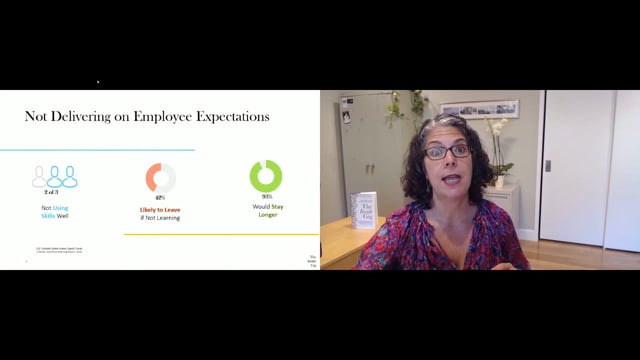
- Know what you have: most HR systems track job titles, not actual skills, so companies routinely have no idea how many people could do a given piece of work if asked. Building a real skills inventory, including skills gained outside the day job, makes it possible to redeploy people into new priorities instead of defaulting to a new hire or contractor. Artificial intelligence can help by scanning work product for demonstrated skills and inferring adjacent skills employees are likely to pick up quickly.
- Democratization of work: giving employees visibility into open projects and letting them opt in, rather than leaving assignments to managers or political connections, shifts power in the employment relationship and gives people more say over what they work on.
Examples include Verizon shifting retail staff into customer support roles during the pandemic, Ford engineers moving onto ventilator production, and Cisco building an internal opportunity marketplace to grow employees into cloud and Internet of Things skills it couldn't hire for fast enough.
The broader argument is for organizing around projects rather than jobs, and for breaking down the wall between talent acquisition and talent management so that filling critical roles starts with a real accounting of who already works there.