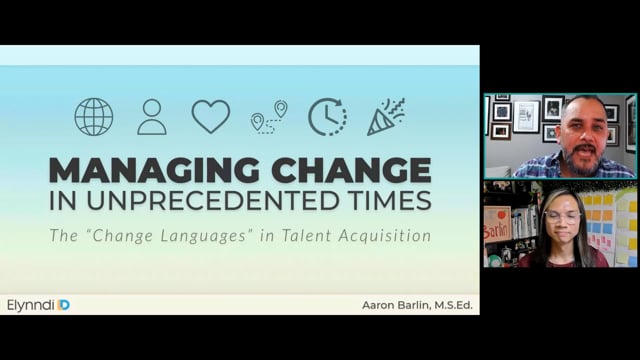
Managing Change in Unprecedented Times
October 24, 2025 · Webinars ·
Speakers

About this video
Change management gets a language-based framework built around a simple idea: just as people have different love languages, they have different change languages. Understanding which one you and your colleagues speak reveals why some changes land smoothly and others meet quiet or vocal resistance.
Six change languages are defined, each reflecting a different core need during transformation:
- Big picture clarity — wanting to understand where, how, and why a change fits into broader organizational systems and outcomes.
- Personal security — needing reassurance that job security, psychological safety, and team stability are protected.
- Values alignment — looking for confirmation that a change is motivated by shared principles or a genuine greater good.
- Sense of continuity — wanting to know what will be preserved from past practice, so change feels like evolution rather than erasure.
- Careful timing — preferring change rolled out in phases, with room for feedback, mistakes, and adjustment rather than overnight overhauls.
- Celebrating growth — treating change as a source of joy, driven by visible milestones and positive, non-toxic reinforcement.
Each language is illustrated through a recurring scenario: a hiring team revising a longstanding entry-level job description. Real talent acquisition situations extend the framework further, including a shift between HR software platforms, an interview training rollout that raises questions about accountability, and a cross-functional AI hiring strategy project. Each example shows how easy it is to mistake one change language for another — a comment that sounds like personal security may actually be about procedure, and a request for accountability metrics may really be about celebrating measurable growth rather than avoiding blame.
The larger point is practical: identifying which language a colleague is speaking, and which one comes naturally to you, makes it possible to respond to resistance without talking past each other. Recognizing a colleague's language changes how a message gets framed, whether that means mapping stakeholder systems, naming what stays the same, setting a phased timeline, or highlighting small wins along the way.
A self-assessment exercise closes out the material, offering a quick way to identify personal tendencies across the six languages and to spot where friction with colleagues or teams is most likely to occur during periods of organizational change, from AI adoption to reorganized hiring processes.