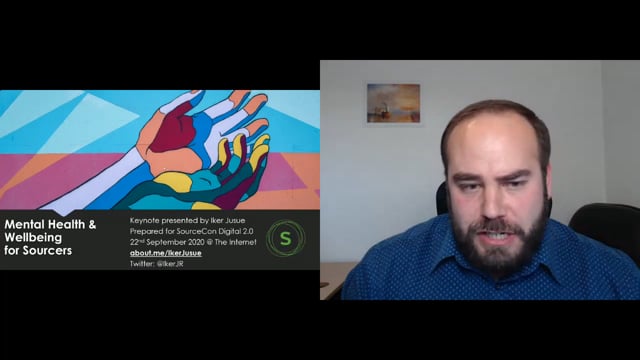
Mental Health and Personal Growth for Sourcers
September 22, 2020 · SourceCon Digital Fall 2020 ·
Speakers

About this video
Sourcing work carries a particular kind of stress: endless choice among tools, hiring managers who always want more candidates, and a nagging feeling that nothing is ever quite finished. Drawing on a background in psychology and mental health work before moving into recruitment, a set of concepts from that field gets applied directly to the daily pressures of sourcing.
- Analysis paralysis — the tendency to keep testing search strings, Chrome extensions and platforms instead of finishing the task at hand. Fixing it means treating it like exposure therapy: break the work into small chunks, set a defined number of candidates to find or messages to send, and act before the search feels perfect.
- Paradox of choice — having too many tools available becomes its own source of anxiety. A simple dashboard listing current tools and priorities, rather than trying everything picked up at a conference, keeps the toolkit from becoming overwhelming.
- Imposter syndrome — common among high performers who feel they will eventually be "found out," especially after sitting through a conference full of experts. Keeping a running list of small wins, such as a candidate thanking you for a personalized message, helps counter the feeling and keeps expectations realistic.
- The right to disconnect — managers who message day and night, and sourcers who never feel they've done enough, create a cycle of overwork. Because there is always another candidate to find, teams and leaders need boundaries around after-hours contact rather than relying on the individual to manage it alone.
- Lack of control — hiring managers changing requirements, candidates who go quiet no matter how good the outreach, and companies that still treat sourcing as a junior or support function all fuel frustration that sourcers can't fully manage.
- Flow and motivation — matching the challenge of a search to current skill level, setting clear and achievable goals, and focusing on the intrinsic reward of solving a hard search problem rather than only external praise or pay reduces stress and makes the work more sustainable.
Peer support, mentoring inside a team, and community spaces for sourcers to talk through difficult searches or bad weeks round out the practical steps for managing the emotional weight of the job.