Programmable Search Engines: Automating Your Boolean
October 21, 2021 · SourceCon Digital Fall 2021 ·
Speakers

About this video
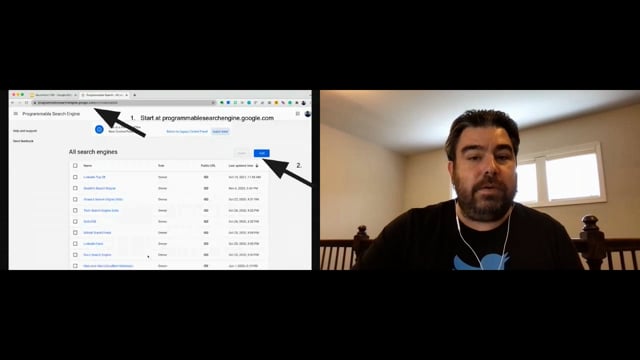
Google limits any single search to a small number of terms, which is a real constraint when sourcing requires stacking Boolean across multiple sites. A programmable search engine (also called a Google custom search engine, or CSE) removes that ceiling by letting hundreds of terms run behind the scenes, triggered by a single click instead of retyped every time.
Setting one up requires only a Gmail address and a visit to programmablesearchengine.google.com. From there, the process covers:
- Restricting the engine to specific sites — such as linkedin.com/in, github.com, and behance.net — so results never wander into the open web or get buried in directory pages
- Turning on image search and safe search for a work-appropriate tool, and setting language options to return results globally rather than in one language only
- Building "refinements" — saved Boolean filters that act like buttons, so a single click reruns a stored string instead of retyping site commands and quotation marks every time
- Creating a refinement for email addresses using variations on @gmail.com, @yahoo.com, @me.com, @hotmail.com and similar domains, useful for reaching candidates directly instead of relying on InMail
- Building a diversity-focused refinement around natural-language terms tied to women-in-tech communities, such as Grace Hopper, Anita Borg, and Girls Who Code, to surface engineers who likely attended those events
- Filtering for active candidates using natural-language phrases like "open to work," "OTW," "O2W," or "looking for my next opportunity"
- Inviting collaborators as co-owners so a team can share and continue building out synonyms, filters, and Boolean together
The same approach extends to niche sites, competitor lists, regional domains like australia.linkedin.com/in, and any other source a recruiter checks regularly. Once refinements are saved, searching becomes a matter of typing a job title once and clicking through pre-built filters, rather than reconstructing X-ray strings and site restrictions from scratch every session.
Once the engine is built, running a search is just typing a title and clicking a button instead of rebuilding a string from scratch.