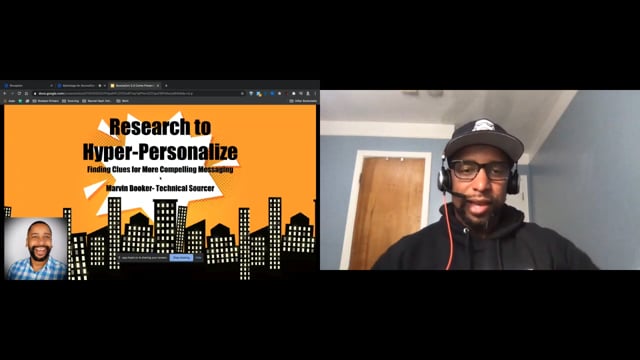
Research to Hyper-Personalize
September 23, 2020 · SourceCon Digital Fall 2020 ·
Speakers

About this video
Buzzword-stuffed InMails and generic "I came across your profile" messages get deleted, blocked by spam filters, or screenshotted and mocked. A framework for building outreach that actually connects starts with a simple question: why is this person being contacted at all, and what would make them care?
Before any message goes out, the work is research. Practical, low-cost sources include:
- A company's LinkedIn "About" section to understand what it actually does and how a role fits into it
- Google News, Yahoo Finance, and Google Finance to track how a company is performing, including funding events or IPOs that affect whether someone is likely to move
- TechCrunch, Crunchbase, and Hacker Noon for industry and company context
- Quora and Hacker News to follow technical discussions and pick up real vocabulary and debates within a field, without ever posting
- Medium for firsthand articles people write about their own work and companies
- Portfolio sites like Dribbble, Behance, and Coroflot for design, UX, and creative candidates
That research feeds into personalization: naming the actual reason someone was found, tied to their real work, a paper, a product, a technology, rather than a vague reference to a profile. It also means having a plan for what happens after someone replies, and being explicit about the ask, whether that's fifteen minutes or a short call, while recognizing that a small chunk of someone's time can matter enormously to them.
Mistakes happen. Automated follow-ups sent without rechecking notes from an earlier conversation can undercut all the personalization that came before. Reviewing what was promised in a first message, and how it was customized, before sending anything automated afterward, prevents that kind of misstep.
Treat the person on the other end of a message as a person, not a data point in a spreadsheet.
Spam blockers built specifically to filter recruiter outreach are increasingly common, which makes generic, repeated messaging even less effective. The alternative is fewer, better-aimed messages built on real information about the company, the role, and the individual, sent with a clear sense of why they'd want to respond at all.