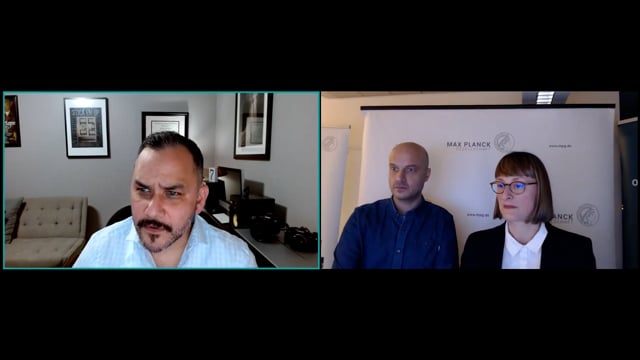
Scientific Scouting for the Most Talented Researchers
March 28, 2023 · Webinars ·


About this video
Recruiting for a research organization built around scientific freedom looks nothing like a standard hiring process. The approach centers on what's called the Harnack principle: funding outstanding individuals rather than programs, giving them long-term core funding and complete freedom to pursue whatever research direction they choose, even if that means changing course mid-career.
The structure that makes this possible is a network of autonomous institutes, each recruiting its own staff, controlling its own budget, and setting its own research agenda rather than following a centralized plan. Department heads within these institutes hold their positions for decades, which means openings are rare, high-stakes, and planned years in advance.
Key elements of the hiring model include:
- An analogy to Olympic scouting: only the gold medalist will do. If the top candidate turns down an offer, the search restarts from scratch rather than defaulting to the second- or third-ranked candidate, because the entire research concept for the role may need to change.
- Succession planning that begins years before a director retires, led by colleagues in the same institute rather than the departing director, with searches sometimes taking far longer than the eventual hiring decision.
- "Cluster retirements," where several directors in one institute leave within a short span, creating a rare chance to redirect an institute's entire scientific focus rather than simply replacing like with like.
- Evaluation panels combining internal directors close to the research area with external experts who have no institutional ties, to keep assessment independent.
- A scouting function staffed by former scientists with no prior recruiting background, brought in deliberately so they would question existing practice rather than replicate it.
Candidates for these roles are judged on being at the forefront of their field, pursuing an ambitious and original research vision, and being able to thrive with minimal constraints once hired. The broader context driving all of this is a coming wave of retirements that will open a large share of leadership positions within the next two decades, giving the organization an unusual opportunity to reshape entire scientific fields through who it chooses to bring in next.