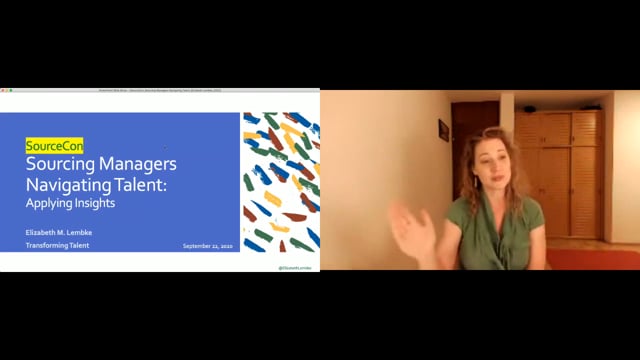
Sourcing Management in a Disrupted World
September 22, 2020 · SourceCon Digital Fall 2020 ·
Speakers

About this video
Sourcing leadership looks different than it did before the world got disrupted. Early crisis management was about logistics: getting a dispersed workforce online and stable. That phase has passed. The focus now sits on longer-range enablement, empathy, and responding to the specific needs of a workforce under sustained strain.
Leadership itself is being judged differently. Outcomes alone no longer tell the story; how those outcomes were reached matters just as much. Soft skills, once treated as secondary to technical upskilling, have moved to the center. Social connection and isolation, previously a background concern, now sit squarely on a leader's radar.
A practical way to reorient: treat every interaction, with employees, customers, vendors, contractors, as a value exchange. Two questions cut through the noise:
- How has your most important customer base changed, and what are they actually telling you about it?
- Have their underlying needs shifted, not just their stated requests?
Team management runs on the same talent-101 logic managers have always used, buy, build, borrow, promote, retain, upskill, automate, but the balance among those levers has moved, and retention now looks different for every individual rather than following one policy.
Metrics deserve scrutiny too. Headcount as a measure tells a manager little about contribution or growth, and pure efficiency metrics can hide the damage being done to people who will still be there when the crisis ends. A short internal litmus test helps: What is the organization obsessed with? Is there a real learning culture where ideas move freely? Are barriers to collaboration, and to basic humanness, being removed where it counts?
A simple matrix maps what different groups actually want from an experience, whether that's the employee, the customer, or the end user, and forces a working answer to what impact should feel like, not just what it should produce. Working backward from that feeling toward the metrics that track it turns an abstract goal into something a team can actually build toward, and shifts attention away from pure efficiency toward whether the work is actually landing the way it's meant to.