Sourcing Transformed: Advanced Tools, Strategies, and Hacks in the Year of the Home Office
March 10, 2021 · SourceCon Digital Spring 2021 ·
Speakers

About this video
A practical rundown of sourcing tactics built around free and low-cost virtual conferences, scraping tools, drip messaging, and growth hacking, all aimed at building candidate pipelines without spending much money.
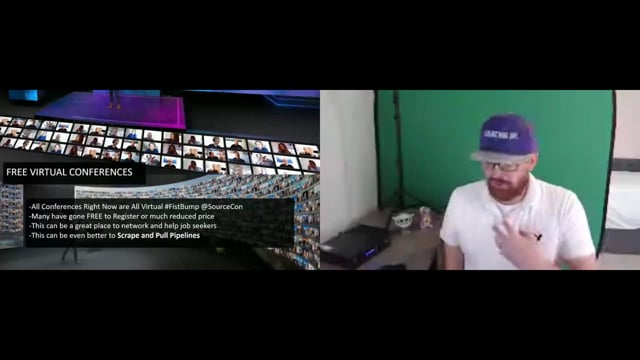
Virtual conferences turned out to be a major source of pipeline during the shift to remote events. Speaker and attendee lists posted through platforms like Sched can be pulled with browser-based scrapers such as DataMiner, Instant Data Scraper, or WebScraper, producing name, job title, company, and a direct profile link for thousands of people at once. Shortlisting by job title before doing any manual research saves time and keeps outreach targeted rather than working through an entire list one profile at a time. Facebook groups tied to conference registrations, Discord servers, licensing boards, and apps like Upstream or Jobseer are also treated as overlooked talent pools worth tapping.
Several concrete tactics come up:
- Using DataMiner 5's crawler function to move beyond a single-page scrape and pull multiple linked profiles, aggregating several social profiles per person from one starting site.
- Treating LinkedIn profile URLs pulled from these scrapes as the input for Chrome email-finder extensions, since most of those tools source data from LinkedIn.
- Writing drip campaign messages that are short, conversational, and free of stock recruiting language or heavy job descriptions, closer to what a recruiter would actually say on the phone.
- Posting sourcing content across multiple Facebook groups, LinkedIn, and Twitter, tagging relevant people, using specific hashtags, and prioritizing video or GIF formats since social platforms tend to boost video content in feeds.
- Using tools like Lumen5 and Breakout Clips to build short, interactive promotional videos without needing a full video-editing background, along with a look at what YouTube Shorts is expected to offer once it rolls out more broadly.
Results from early drip campaign tests are broken down by open and click-through rates, along with why none of the messages got flagged as spam, chalked up to keeping the tone human rather than promotional. Forums like Reddit and Quora, along with custom search engines built to surface niche professional communities, round out the pipeline-building toolkit described throughout.