Story-Driven Hiring: How Content and Culture Solve Recruiting and Retention Challenges
June 10, 2025 · Webinars ·
Speakers


About this video
Employer brand messaging often relies on platitudes: "we're like a family," "we have great work-life balance," "every day is my best day." None of these differentiate an organization, and none of them convince a skeptical candidate. A real employee story does the work those phrases can't.
A genuine story has five qualities: it's specific to a moment in time, it's personal to the person telling it, it's realistic rather than polished into meaninglessness, it treats the company as a character that actually did something (a benefit, a policy, a manager's decision), and it leaves the listener wanting to opt in or opt out. An example built around a caregiving leave benefit and an employee's experience with a family health crisis shows how a single well-told story communicates more about culture than any mission statement.
Once a story is captured, it can be repurposed across nearly every format and channel:
- Short video spotlights and longer culture videos featuring multiple employees
- Social graphics and pulled quotes
- Employee photography paired with quotes to help candidates visualize the workplace
- Blog posts, Q&As, and story snippets for career sites
- Talent community and interview-prep emails, an often-overlooked channel for building emotional connection over time
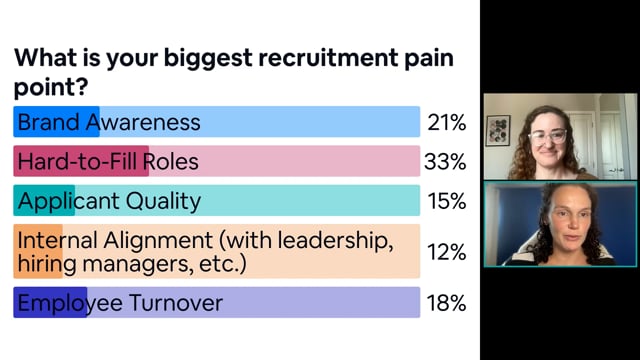
Getting this content made usually requires aligning stakeholders who don't normally collaborate: hiring managers, HR, corporate communications, marketing. Rather than trying to align everyone at once, starting with one or two groups that share a specific pain point, such as a hard-to-fill role, builds early momentum. Framing the work around what each group gets out of it, inviting them into the process early rather than presenting finished content, and letting skeptics preview interviews or sit in on a shoot tends to convert resistance into buy-in. Sharing budget across departments also allows for bigger, higher-impact campaigns.
Practical answers to common objections come up as well: how to get usable footage without a full production crew, how to keep a story consistent when recording informally, and how to address managers who say their team doesn't have time to participate. The recurring fix is treating storytelling as recognition rather than extra work, and being deliberate and time-limited when asking employees to take part.