Talent Acquisition in the Face of Uncertainty: Future-Proofing Your TA Function
May 16, 2023 · Webinars ·




About this video
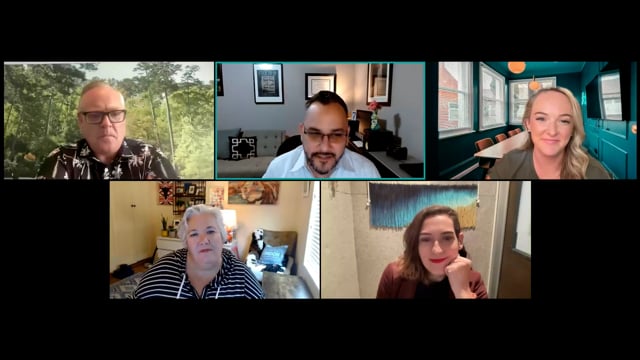
Talent acquisition is being pulled in two directions at once: candidate expectations keep rising while new generative AI tools move faster than most TA functions can absorb them. A panel conversation brings together leaders from enterprise and hypergrowth companies to argue over how much of recruiting is about to change, how fast, and what practitioners should do about it.
The discussion centers on a blunt prediction: sourcing as a standalone function is unlikely to survive in its current form. Tools built on large language models can already handle much of the top-of-funnel work that sourcers do today, and the technology is improving faster than TA teams can test and adopt it. That shift is described as different in kind from earlier waves of recruiting tech, driven by AI that learns without heavy manual training, pulls from far larger data sets, and reduces some of the bias baked into older tools.
Rather than treating this as a threat, the panel frames it as a chance to fix long-standing problems in the profession, including:
- A recruiting model still organized around individual requisitions, which slows hiring and limits pipeline building
- Weak candidate experience practices that treat applicants as transactions rather than relationships
- A persistent respect gap for the TA function inside businesses, tied partly to how candidates have historically been managed
- Sourcers and recruiters who have not yet built fluency with AI tools inside their daily workflow
The recommended response is to move from requisition-based recruiting toward more marketing-style pipeline development, treating candidates the way consumer brands treat customers. Recruiters are pushed to shift away from repetitive, mechanical tasks and toward acting as advisors and coaches to both hiring managers and candidates, using AI to handle volume so people can focus on judgment and relationship work.
On timing, the group disagrees only on degree. Some see full automation of the funnel, from sourcing through hiring decisions, arriving within roughly a year and a half at leading companies. Others put themselves at three-quarters of that level of urgency, but all agree that the old pattern of testing a new tool for six to twelve months before deciding on adoption no longer works. Waiting to react instead of experimenting now is presented as the real risk to a TA career, more than the technology itself.