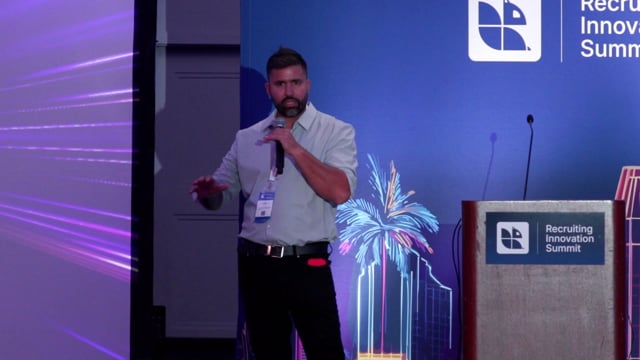
Tech Show & Tell
November 4, 2025 · ERE Recruiting Innovation Summit Fall 2025 ·
Speakers


About this video
A live audience walk-through covers how recruiting and talent acquisition teams are actually building and using custom GPTs, agents, and enterprise AI instances, with real examples pulled up on screen rather than theory.
One core example centers on a private, enterprise version of ChatGPT trained on tens of thousands of research papers, psychology frameworks, and employer-brand data, then walled off into separate "instances" for each client so no company's information touches another's. Building it took months of iterative work: collecting validated source material, uploading it in scoped files, testing outputs against real use cases, and going back and forth with the model to close gaps between what it produces and what's actually needed.
A side-by-side comparison shows what changes when a model is trained on a specific company's EVP versus left generic. A generic prompt about relocating for a real estate role surfaces language the brand would never use, while the trained version pulls in the company's actual positioning, tone, and current messaging pillars, catching details a stock chatbot misses entirely, like outdated statistics or values that don't match the brand.
Other practical points covered include:
- Using AI to run monthly audits of Glassdoor review sentiment and turn it into a brand-health scorecard, including catching patterns like new-manager toxicity and generating a change-management plan grounded in organizational psychology
- The difference between free, Pro, Team, and Enterprise ChatGPT tiers, and why free accounts mean your data trains the model whether you intend that or not
- Why no single AI tool does everything well: one platform for data analysis and statistical modeling, another for creative or visual work, and why chaining several tools together beats trying to force one to do it all
- Replicating LinkedIn-style talent insights functionality inside a custom GPT using externally sourced data, since LinkedIn's own data stays walled off
- How to keep learning which tool fits which task, including asking AI assistants directly which model performs best for a given job