The AI Revolution in Talent Acquisition: Navigating Transformative Shifts & Opportunities
July 13, 2023 · Webinars ·



About this video
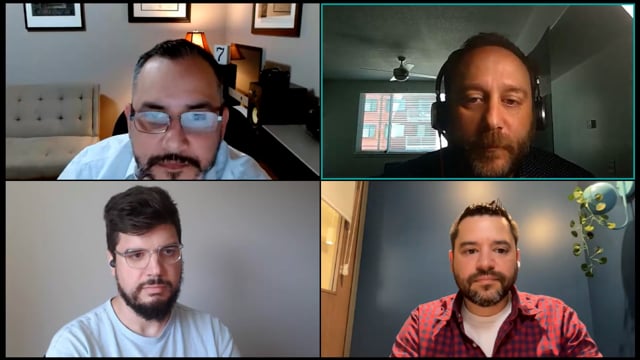
A panel of talent acquisition and product leaders walks through what artificial intelligence actually is today, how large language models work, and what that means for recruiting practice right now rather than in some speculative future.
The conversation opens by separating hype from mechanics: current tools are large language models, not artificial general intelligence. These systems predict the next word based on multidimensional relationships between words and phrases, which explains both their surprising fluency and their tendency to produce confident, plausible-sounding errors.
From there the discussion turns practical. Key points include:
- Where AI already helps recruiters: processing large volumes of resumes, surfacing skills data, and speeding up analysis that used to require manual review.
- Why prompting well matters more than most people realize. Giving a model a role, a tone, and a specific context ("write this like an email to a Star Trek fan," "explain this in space-industry language") produces sharply better output than a generic request.
- Using AI to build reusable templates for outreach emails, job descriptions, and other recurring writing tasks, then having the model explain its own capabilities so recruiters don't have to memorize every option.
- Treating AI output as a first draft rather than a finished answer. Editing, fact-checking, and evaluating results for accuracy is presented as a core skill recruiters need to build now, not later.
- Hallucination as a double-edged trait: a liability when accuracy matters, but useful for creative writing tasks like drafting varied, personality-driven candidate outreach.
- The case for using AI to make recruiting communication less generic and more human, replacing boilerplate outreach with messages tailored to a candidate's background, interests, or industry.
- The argument that recruiters remain undervalued because they don't push labor-market data to decision-makers, and that AI-assisted analytics can help close that gap.
The overall picture is of a technology already embedded in recruiting workflows well before generative AI arrived, now accelerating through better prompting, faster data synthesis, and tools that reward creativity as much as efficiency. Critical thinking and data judgment come up repeatedly as the skills that separate recruiters who get real value from AI from those who simply get faster at producing average work.