The Great Tech Interview Playbook
December 11, 2025 · Webinars ·


%20(1).jpg)


About this video
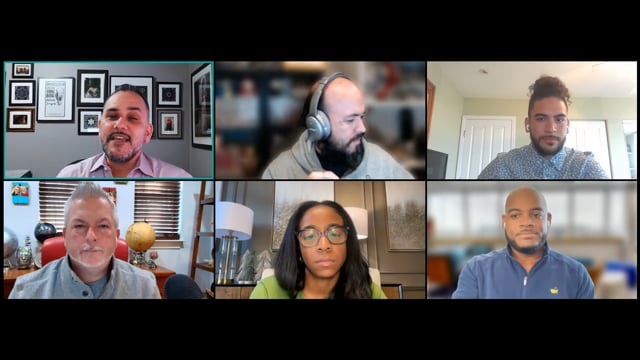
Technical interviewing is shifting away from whiteboard puzzles and algorithm trivia toward formats that mirror what engineers actually do on the job. The conversation centers on how engineering and talent acquisition leaders are redesigning assessments to be realistic, time-bounded, and inclusive of the tools candidates will use once hired, including AI.
Key points covered include:
- Real-world interviews should resemble day one on the job: solving an actual problem, using the actual tools (including AI), and working collaboratively rather than answering "gotcha" or memorization-based questions.
- Take-home assignments that demand hours of unpaid work create inequitable processes, favoring candidates with free time over those juggling a current job. Many teams have shrunk technical evaluations down to 60-90 minute windows.
- Some candidates still benefit from an optional take-home path, especially those from nontraditional backgrounds or who find live coding stressful. Offering a choice of format, rather than mandating one approach, can surface stronger candidates.
- Classic algorithm and data-structure questions are losing favor because they measure preparation and memorization rather than job performance, though some teams still use them as a baseline check on fundamentals for certain roles.
- Strong examples of authentic tasks include asking candidates to break down a real technical specification into tasks, debug an existing feature, design a system for scalability and reliability, or work through a "vibe coding" scenario alongside an interviewer.
- Pair programming and think-aloud problem solving consistently get positive candidate feedback, since they let interviewers judge reasoning and approach rather than just the final answer.
- Preparing candidates ahead of time with a clear roadmap of what to expect, and encouraging them to narrate their thinking, reduces the gap between interview performance and true on-the-job ability.
- Candidate feedback on interview experience should feed back into how a process gets redesigned, since consistent complaints about a stage usually signal a structural problem rather than a candidate problem.
Interview behavior is not necessarily work behavior. Pressure changes how people perform, regardless of what they actually know.
The overall shift favors evaluations that predict on-the-job success rather than interview-day performance, with AI fluency now treated as a core part of realistic technical assessment rather than an afterthought.