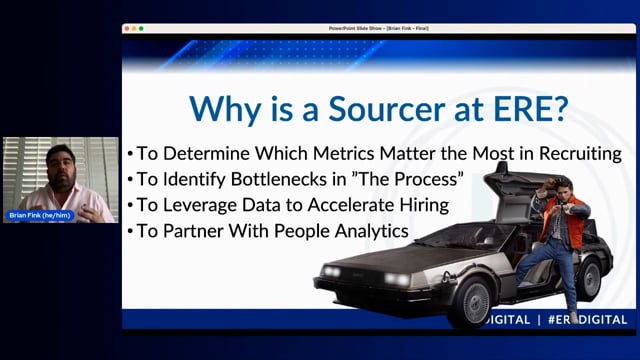
Winning the Numbers Game: Metrics That Matter Most to Amp Up Hiring Velocity
April 6, 2022 · ERE Digital Spring 2022 ·
Speakers

About this video
A wide range of recruiting metrics gets broken down, with attention to which ones actually move the needle on hiring speed and quality rather than just looking good in a dashboard. The focus stays on how to use data to have sharper conversations with hiring managers, recruiting partners, and candidates, and how that data ultimately connects to people analytics and business outcomes.
Metrics covered include:
- Time to hire versus time to fill, and why time to hire matters more for specialized roles tied to a specific function
- Source of hire, including job boards, HBCUs, and LinkedIn, and how each channel should be evaluated for real impact
- First-year attrition and what it signals about hiring quality and candidate fit
- Quality of hire and hiring manager satisfaction, including turning qualitative feedback into a net promoter-style score
- Applicants per opening and selection ratio, and what shifts in applicant volume mean for sourcing strategy
- Cost per hire, framed beyond interview hours to include the cost of unfilled capacity and lost sales
- Candidate experience, including the business cost of poor communication with candidates who don't move forward
- Offer acceptance rate and how pay transparency affects it
- Application completion rate and how quick-apply tools change what that number actually measures
- Funnel effectiveness across sourcing, agencies, RPOs, and job boards, and the channel costs tied to each
- Time to productivity for new hires at different seniority levels
- Adverse impact and diversity metrics tied to recruiting activity, not just stated commitments
Sourcing-specific metrics get particular attention: open rate, response rate, and interview conversion rate from outreach, and how these feed directly into time to hire. A funnel analysis walks through each transition point, applicants to phone screens, phone screens to onsites, onsites to offers, and offers to hires, showing where misalignment with a hiring manager typically shows up and how to trace it back to a root cause.
Practical suggestions include using tools like Tableau or Airtable to connect recruiting data to broader business metrics, sources for industry benchmark data, and methods for estimating cost of vacancy across different types of roles, from sales to nursing to technical positions.