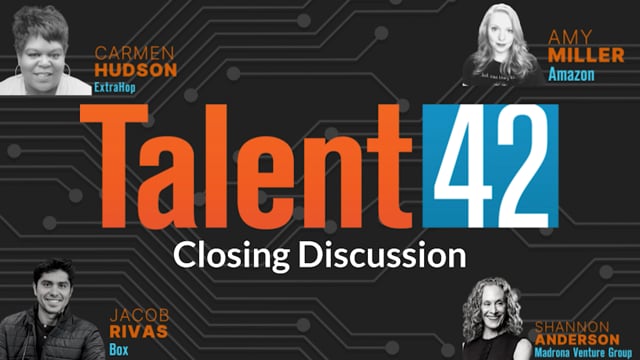
Closing Discussion
June 28, 2022 · Talent42 2022 ·
Speakers

About this video
A panel conversation brings together recruiters and sourcers from across tech to compare what stuck with them from two days of talks, and what they plan to actually change back at their desks.
Among the practical ideas discussed:
- Using scraping and sourcing tools to pull candidate data from platforms beyond LinkedIn, including spreadsheets built to speed up building diverse candidate lists.
- Talent mapping as a way to get ahead of hyper-niche roles before a requisition even opens, rather than starting from zero each time.
- Asking every new hire who the smartest person they knew in school or a previous job was, treated as an uncomfortable but effective sourcing habit worth doing without apology.
- Hosting recurring virtual group sessions, both for new hires and for prospective candidates, where recruiting simply makes itself available to answer questions rather than running one-off calls.
- Listening to hiring managers describe their own career patterns honestly, even when the honesty is unflattering, as a way to stop assuming candidates think about jobs the way recruiters do.
A large part of the discussion focuses on shifting from being an order-taker to a strategic advisor. That shift comes from leading conversations with data rather than feelings, and tying recruiting activity directly to what a hiring manager is measured on: shipping a product, hitting a financial target, hitting an operational goal. Coming to a meeting prepared with real information, rather than a blank notepad, is described as the difference between being dismissed and being trusted.
Another approach involves mapping an entire organization's roles before sitting down with a manager: charting who occupies each position, grading whether they're right for the role, and identifying gaps, so that a recruiting conversation can move from filling one open req to planning where a team needs to be in six or twelve months. Talking to HR business partners and team members ahead of a manager conversation is offered as a way to walk in with informed opinions instead of just questions.
Throughout, there's an emphasis on turning conference connections into an ongoing network: exchanging contact information, following up with people met at round tables, and treating the relationships built over two days as a resource to keep drawing on long after the event ends.