Designing equitable and sustainable hiring practices
March 11, 2021 · SourceCon Digital Spring 2021 ·
Speakers
.jpeg)
About this video
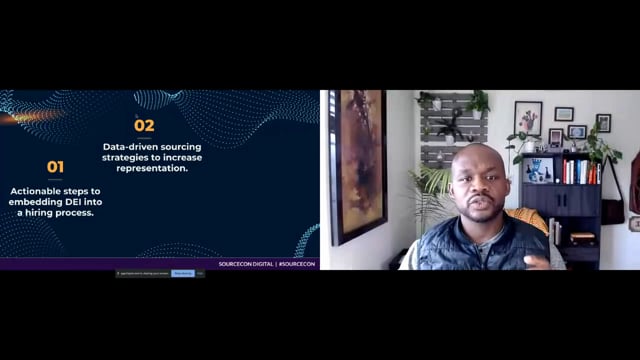
A practical hiring framework built over years of trial and error covers how to embed equity into every stage of the process, from defining a role to closing a candidate.
Before any position launches, a role template captures the goal of the position, the deliverables the person will own, and the specific skills required to deliver them, favoring skills over pedigree. Hiring managers are asked directly what viewpoints, experiences, and backgrounds are missing from their team, which surfaces representation gaps they hadn't previously named and connects the hire to the makeup of the product's actual customer base. A parallel conversation covers the informal, team-level culture that shapes daily interactions, distinct from values posted on a website.
Job descriptions follow a standard template, socialized with the team and outside partners before a role goes live, to reduce bias in language and requirements. Compensation is derived from the scope of work rather than negotiated candidate by candidate, using market-data tools to keep pay fair, transparent, and consistent, and to flag pay gaps tied to diversity.
On the interview side:
- All interviewers go through monthly training covering unconscious bias, structured questioning, and calibration, with one-on-one coaching for anyone drifting off track
- Diverse, paired interview panels replace single-interviewer setups so candidates get a fuller signal on culture and interviewers can compare notes on nuance
- Rubric-based scoring ties every rating to specific evidence from the conversation, ruling out vague feedback like "vibes" or "general feelings"
- Situational and behavioral questions are used instead of trick questions or puzzles unrelated to the role
Sourcing strategy moves past speed-based metrics like time-to-fill toward deliberate, representation-driven pipelines: casting a wide geographic net, building relationships with underrepresented communities, and committing sourcing effort specifically toward closing representation gaps. A one-to-one ratio for underrepresented candidates at the onsite stage, an alternative to the NFL's Rooney Rule, is illustrated with two real hiring examples where reworked sourcing cut time-to-fill dramatically once representation was made the explicit target rather than an afterthought.
Candidate experience gets equal attention, including a shared artifact that explains company culture, interview process, and compensation upfront, along with a policy of re-leveling and re-verifying pay after every interview stage.