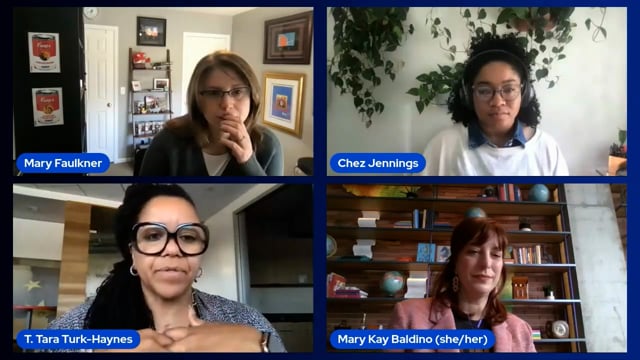
Disruption Is Overrated: Implementing Small Changes for Big Impact
April 6, 2022 · ERE Digital Spring 2022 ·




About this video
Recruiting is usually the first thing blamed when something goes wrong in an organization, and the instinctive response is to call for a total overhaul. A panel of talent acquisition leaders makes the case for a different approach: small, low-risk changes that don't require approval, cross-functional buy-in, or months of planning, but still produce outsized results.
A small change is defined as something that can be made immediately, within an existing process, without waiting on permission or governance. The signals that it's time to try one include a team that feels overwhelmed, candidates or hiring managers starting to route around the official process, or data showing a step isn't performing the way it should, even without a full ATS in place.
Specific examples discussed include:
- Rewriting job postings with more care, a twenty-to-thirty-minute investment that leads to better hiring manager conversations, sharper candidate targeting, and stronger inclusion outcomes
- Eliminating no-reply rejections in favor of personalized messages signed by a named recruiter, which strengthened long-term relationships with passed-over candidates without generating a flood of unwanted replies
- Adding time checkpoints and clear evaluation criteria to a presentation-style interview that was failing candidates at every level, which produced an immediate jump in pass rates once expectations were made explicit
- Being transparent with candidates and hiring teams about how long each stage of the process takes, so people stop trying to bypass it out of confusion
- Making changes as far upstream as possible, since fixes made early in the process pay off at every later stage
The conversation also draws a line between a genuine incremental improvement and a band-aid. A band-aid is a short-term patch used to survive a crisis, and it only works if everyone involved agrees it's temporary; treated as a permanent fix, it tends to get layered with more patches until the process becomes unmanageable. A real fix is one that changes how a team operates going forward. The guidance offered for telling the two apart: if a process is fundamentally broken and won't scale, pause and rebuild it rather than continuing to patch it, but if the underlying process is sound and just needs cleanup, a targeted tweak is enough.