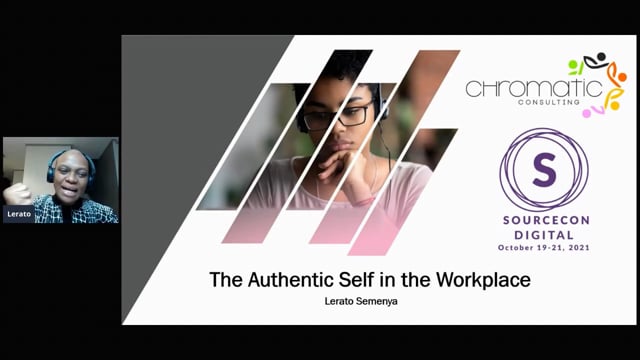
Inclusion and The Authentic Self
October 19, 2021 · SourceCon Digital Fall 2021 ·
Speakers
.jpeg)
About this video
Diversity is a fact; inclusion is a series of intentional actions; belonging is what happens when those actions add up. The distance between those three ideas shapes how people show up at work, and how much of themselves they hide once they get there.
Several concepts get defined and worked through in detail, with practical implications for anyone building relationships with candidates and colleagues:
- Authenticity as self-awareness and confidence, rather than a fixed personality trait, and why it matters for holding space for someone else
- Inclusion as equal access to opportunity and resources, not just fair treatment, and why culture forms whether or not anyone intentionally shapes it
- Intersectionality and "othering," and how sitting at the intersection of multiple identities multiplies pressure rather than simply adding it
- Psychological safety, broken down into concrete behaviors: assuming positive intent, engaging in dialogue rather than debate, practicing cultural humility, and being willing to admit mistakes
- The idea of a "social contract" with a trusted colleague who agrees to give honest feedback when language causes harm, in the moment or later
- Unconscious bias as a natural, protective instinct that becomes harmful once it hardens into discrimination, and where those biases actually come from: upbringing, religion, media, peers, changing social norms
- "Covering," the practice of downplaying appearance, affiliation, advocacy or association to avoid discomfort or unwanted attention, with figures showing how widespread it is across women, people of color, LGBT employees and straight men alike
- Emotional tax, the constant low-level vigilance that comes from anticipating bias before it happens, and what it costs people in energy, health and ability to thrive
Inclusive recruitment gets treated as more than a pipeline problem: job requirements, "nice to haves," and interview structures often exclude people before a conversation even starts. The argument threads back to sourcing and hiring directly, connecting these ideas to how recruiters build trust with candidates, how job ads either widen or narrow who applies, and why the quality of a working relationship often outlasts any single placement.
Diversity is a fact. Inclusion is a series of intentional actions.
Practical prompts are offered for personal reflection, including questions about assumptions made about you, whether stereotypes can ever be positive, and what has shaped your own relationship to difference.