Key Metrics for Data-Driven Candidate Experience
July 24, 2024 · Webinars ·
.png)


About this video
Measuring candidate experience only pays off when the data reaches the right people in a form they can act on. A shared set of survey scores means little to a recruiter juggling requisitions and little more to a CEO scanning a dashboard once a quarter. The material here breaks down what each role in talent acquisition actually needs to see, and why.
Before getting into roles, the case for measuring candidate experience at all gets laid out plainly: better quality of hire, faster time to hire, higher offer-acceptance rates, and stronger referral and brand outcomes. Notably, even rejected candidates who felt they were treated fairly still refer others at meaningful rates, and for consumer-facing companies those same candidates are often customers too.
The core of the discussion is a role-by-role breakdown of metrics:
- Recruiters need a simple, current view of candidate satisfaction (an NPS-style score), trends over time, and hiring-manager satisfaction gathered at the close of each requisition, paired with real candidate comments so the numbers stay connected to actual experiences.
- Talent acquisition managers and directors need aggregated views across their teams or divisions to spot where processes are breaking down.
- Operations managers and analysts dig deeper into the data to find actionable patterns rather than surface-level scores.
- Hiring managers get feedback tied to their own interview and decision-making behavior.
- Executives and CHROs need roll-up metrics that connect candidate experience to broader people-operations goals.
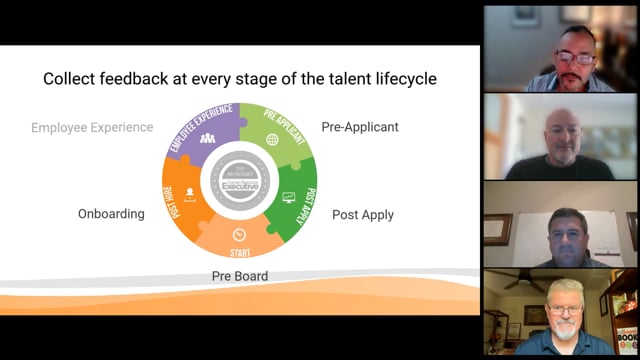
A running theme is the difference between occasional measurement, such as a single post-hire survey, and continuous feedback gathered at every stage of the hiring journey. Post-hire-only surveys are common but carry a built-in bias, since only successful candidates are asked. Gathering feedback more frequently, and tying it back to operational data, is described as a maturity level worth building toward.
There's also a candid look at pressure on the recruiter role itself: leaner teams, higher application volumes, and rising expectations that recruiters act as advisors rather than gatekeepers. Freeing recruiters from repetitive administrative work, including through automation, is framed as a way to give them more time for the relationship-building that shows up directly in satisfaction scores and candidate comments.