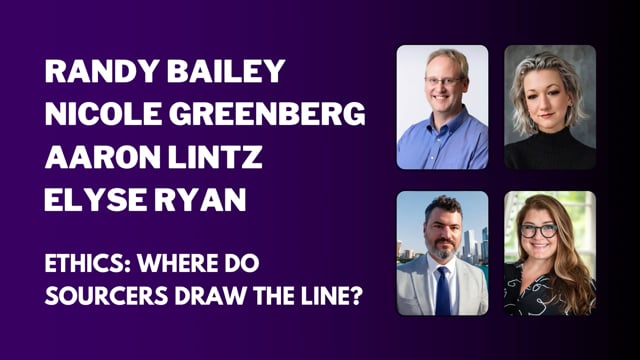
Panel - Ethics: Where Do Sourcers Draw the Line?
October 22, 2024 · SourceCon Fall 2024 ·
.png)
.png)

.png)
About this video
A conversation among longtime sourcing professionals tackles the questions that rarely get discussed out loud: when does clever automation cross into time sheet fraud, and when does creative research turn into something closer to theft or hacking?
The discussion opens with the scariest scenarios first, working through territory like:
- Automating a task down to an hour but logging a full day of work, and whether that counts as fraud even when the employer never notices or seems not to care
- Remote workers claiming a location for tax or salary purposes different from where they actually live, and the liability that creates for employers
- Sharing paid licenses or login credentials across a team when a company only budgets for a couple of seats, and whether that amounts to stealing a service
- Getting around paywalls with tools built for that purpose, and how one practitioner's stance on this shifted over the course of a career, eventually pushing employers to simply pay for access instead
- Whether a candidate list found through a misconfigured admin setting, a guessable URL pattern, or a forgotten "private" checkbox counts as public data simply because it's technically reachable
A recurring point is that legality and ethics are not the same thing: plenty of legal actions feel wrong, and plenty of gray-area tactics are technically defensible. The distinction that keeps surfacing is transparency. Automating a role isn't unethical if a manager knows about it and is fine with the outcome; it becomes a problem only when someone hides what they're actually doing.
Real examples come up throughout, including a supplier-facing website that unintentionally exposed an entire company's merchandising organization for years, and the difference courts have drawn between visiting a public webpage versus brute-forcing data out of a system that was never meant to be queried that way.
Rule number one is honesty about what you're actually doing. If you can't be honest about it, you're probably not being ethical.
The conversation also turns to management: how much responsibility a manager bears for knowing where a team's candidates actually come from, what happens when an employer is the one pushing questionable tactics, and how someone earlier in their career can hold a line without risking their job.