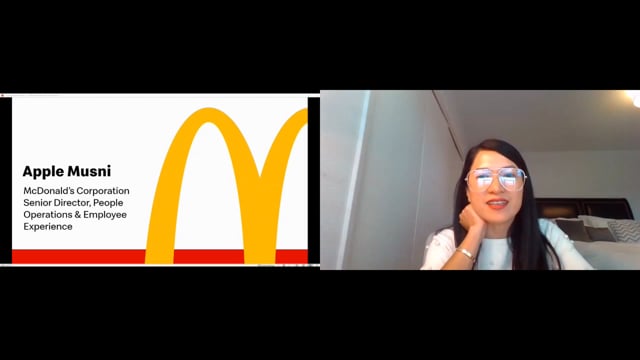
Partnering With HR and Business Leaders to Elevate Your Employer Branding
May 26, 2021 · ERE Digital Spring 2021 ·
Speakers

About this video
Employer branding often gets treated as a recruiting function, but a broader view treats it as the total story of an organization as an employer, from hire to retire. That reframing drove a major rework of employee value proposition strategy at a large, mostly franchised quick-service company, where consistency across thousands of independently owned locations became a central challenge.
The work started with aligning business leaders around the idea that people strategy is a growth driver, not just a support function. From there, research with consumers, current employees, and prospective hires identified five pillars that consistently mattered most:
- A safe, respectful, and inclusive workplace
- Training and career growth
- Flexibility
- Community and family
- Pay and benefits
These pillars, aligned with newly defined corporate values, became the lens for both recruitment marketing and the design of the entire employee journey. Candidate experience work included new digital onboarding and interview tools, along with a hiring assessment built around simple visual choices rather than traditional questions, designed to reduce bias and shorten completion time to under two minutes. Early results showed strong completion rates and a majority of candidates reporting increased interest in the company after taking it.
A recurring theme is that recruiting is the easier half of employer brand work; sustaining that brand through the full employee experience, and using it to reduce turnover, is the harder and longer-term challenge. Staffing shortages, in this view, are really retention problems in disguise.
Other points covered include:
- Framing employer brand versus corporate brand as related but distinct: one shapes how employees see the company, the other shapes how everyone does
- Building internal buy-in by translating HR outcomes into language business leaders already use, such as cash flow and consumer trust
- Resolving ownership tension between HR, marketing, and communications by creating a dedicated employer brand role inside HR
- Segmenting messaging by tools and channels rather than by rewriting values, since employee priorities tend to hold steady across different worker populations
- Testing new employer brand language deliberately, while staying flexible enough to adapt as external conditions shift