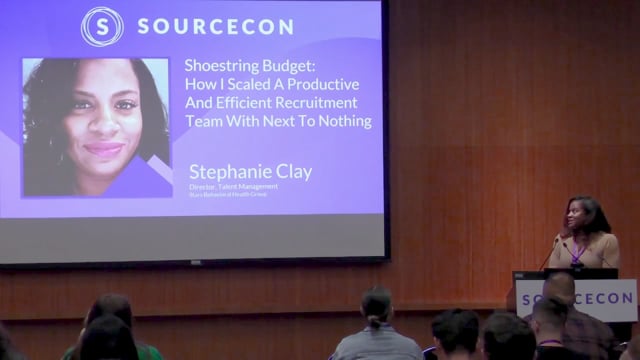
Shoestring Budget: How I Scaled a Productive and Efficient Recruitment Team With Next to Nothing
October 17, 2022 · SourceCon Fall 2022 ·
Speakers

About this video
Rebuilding a recruiting function after a workforce was gutted by the pandemic required speed, structure, and almost no spending. A government-funded healthcare provider needed a full team stood up in a matter of weeks, with no room for enterprise software or big agency fees. What worked instead was a set of low-cost systems built around clarity, accountability, and existing free tools.
- A team playbook. A single, living document covering mission and values, job descriptions, compensation data, sourcing strategies, SLAs, and vetted resources gave new recruiters one place to find everything they needed to get moving fast.
- An open-book assessment. Built in Google Forms, a short test based on the playbook confirmed recruiters understood their roles, surfaced how they worked independently, and doubled as a running FAQ for the whole team.
- A speaker series. Bringing in contacts from a personal network to talk about sourcing, campus recruiting, and candidate experience exposed a brand-new team to outside expertise and built culture without a training budget.
- Candidate self-scheduling. Free and low-cost scheduling links let recruiters keep pipelines moving without back-and-forth emails, with monthly analytics used to track how scheduling activity tied to candidate flow.
- Compliant SMS outreach. A low-cost texting vendor, paired with an opt-in built into the application process, allowed recruiters to communicate quickly with candidates while staying compliant with state right-to-work rules.
- Brand ambassadors and brand advocates. Recruiters were repositioned as ambassadors responsible for company reputation, while high-potential employees were trained to shoot their own content for social and internal sites instead of relying on scripted interviews.
- Community-based social media. Rather than paying for Facebook and Instagram ads, effort shifted to joining local Facebook groups and community spaces where candidates already spent time, building trust through presence rather than paid reach.
- Free virtual events and campus recruiting. Eventbrite listings, LinkedIn Live, Google Meet, and Teams replaced paid event platforms, and steady participation in campus recruiting built a pipeline of early-career candidates at little cost.
Together these approaches turned a two-person team into a fully functioning department without new budget, relying instead on documentation, free tools, and giving recruiters ownership over the brand they represented.