Want to improve Diversity ROI? You need to start pre-funnel
November 9, 2020 · Talent42 Digital Fall 2020 ·
Speakers


About this video
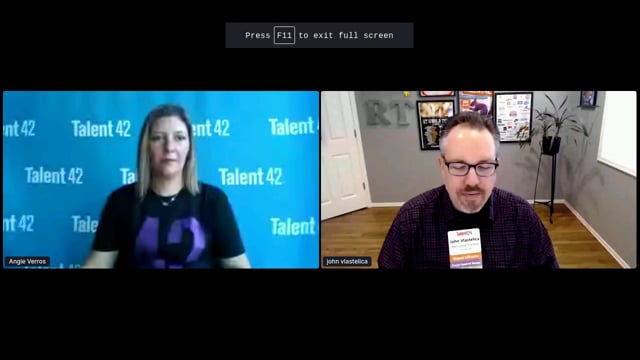
Most diversity hiring effort gets poured into sourcing, but the decisions that actually shape outcomes happen earlier: in how roles get defined, how hiring managers get engaged, and how interviewers get trained. Pre-funnel work covers all of that, and skipping it is why so many sourcing-heavy diversity efforts stall.
Key ideas covered include:
- Replacing "ideal candidate profile" language with multiple success profiles, so hiring managers stop describing a mythical perfect match and start considering people with different backgrounds, schools, and career paths.
- Using labor market data, from vendor tools or public reports from large tech employers, to set realistic diversity targets rather than aspirational ones that ignore actual talent supply.
- Applying an eighty-twenty rule to required skills: if a candidate has most of what a role needs, the rest is trainable, especially given how often engineers pick up entirely new technologies.
- Weighting adjacent skills and soft skills like adaptability and curiosity as heavily as technical must-haves, since rigid technical requirements are often the biggest aperture-narrowers.
- Starting diversity conversations with hiring managers, especially middle managers who drive volume hiring, well before a requisition opens rather than folding it into a thirty-minute intake meeting.
- Recognizing that new practices like interview slate requirements may slow time-to-fill briefly, but that the delay fades once teams build the muscle.
- Training interviewers on culture add instead of culture fit, inclusion as an evaluated competency for leaders, and the specific dangers of confirmation bias and similarity bias.
- Building hiring principles that state clearly what tradeoffs are acceptable, such as prioritizing values and behaviors over a narrower technical background.
- Adopting a "see something, say something" norm so anyone in the interview process, not just the hiring manager, can challenge vague or biased feedback in debriefs.
- Placing a diversity champion in interview loops, focused specifically on assessing a candidate's ability to learn quickly, so that debrief conversations have someone ready to counter objections about missing years of experience with evidence about trainability.
The combined argument: talent is distributed evenly, access is not, and recruiters who move upstream of the requisition have far more leverage over diversity outcomes than those working sourcing alone.
Sponsored by Recruiting Toolbox